Tokyo Story (1953)
★★★ — Tokyo Story (1953)

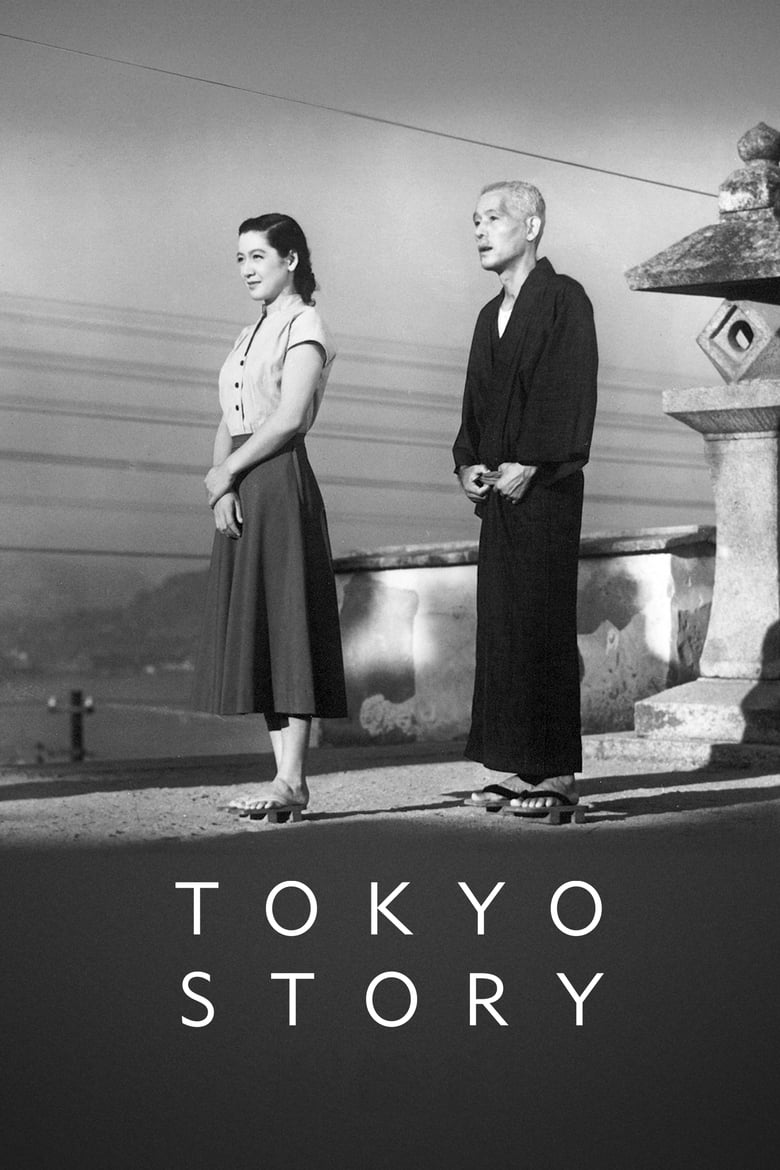
Let me be honest with you: I came to Tokyo Story already knowing the weight of expectation sitting on top of it. One of the greatest films ever made, they say. Essential viewing. A pinnacle of world cinema. And look, I can see it. I genuinely can. But I'd be lying if I told you I came out the other side a total convert.
Yasujiro Ozu's film follows an elderly couple who travel to Tokyo to visit their grown-up children, only to find that adult life has quietly pushed them to the margins. The children are busy, distracted, well-meaning but ultimately absent in the ways that matter. It's a simple premise, and Ozu treats it with the kind of restraint that makes you feel slightly rude for wanting more to happen. His famous low-angle shots, framing characters as if you're sitting cross-legged on the tatami with them, create a genuine sense of intimacy. When music creeps in, it's sparse and lovely. The craft here is beyond question.
And that final third. I won't say much, but when grief arrives in this film, it arrives quietly, and that quietness is devastating. Every small moment from the previous hour suddenly carries extra weight. You realise Ozu has been stacking the shelves all along, and when they finally tip, the emotional impact is real, restrained, and achingly honest. That's the film at its best, and it's very good indeed.
But here's my problem. Getting there takes considerable effort. The opening two thirds unfold at a pace that I'd charitably call meditative and less charitably call slow going. Conversations about train schedules, mild inconveniences, the logistics of where an elderly couple might sleep. I understand exactly what Ozu is doing. He's building a portrait of family life through its mundane textures, showing us how duty and affection can quietly calcify into something more like obligation. The microscopic precision is intentional. I get it. But understanding a technique and enjoying it are two different things, and there were stretches where I found myself admiring the film from a polite distance rather than feeling pulled inside it.
This is a rhythm that fans of Japanese cinema will recognise and probably settle into more comfortably than I did. It reminded me a little of my experience with Yi Yi, another long, slow, deeply humane film about family and time that rewards patience, though I found that one drew me in more steadily than this did. With Tokyo Story, I kept waiting for the film to close the emotional gap between observation and feeling, and for a long time it didn't quite get there.
The near-silence between scenes amplifies realism, no question. But it also creates distance. You spend a lot of the film watching rather than experiencing, noting rather than feeling. And when the payoff finally lands, however genuinely moving it is, it doesn't completely wipe out the memory of the slog that preceded it.
Three stars.
That might read as damning, but I don't mean it that way. Tokyo Story is undeniably important, profoundly humane, and made with a kind of quiet mastery I have enormous respect for. Its view of aging, duty, and the distance that grows between people who love each other is honest and sad in equal measure. But a classic being important doesn't mean it's easy to love, and I think a lot of people feel exactly this way about it and don't quite say so because the reputation is so enormous. It's absolutely worth seeing. Just go in knowing that the patience it asks of you is real, and the reward, while genuine, might not be quite proportionate to the ask.
Rating: ★★★ | Year: 1953 | Watched: 2026-04-15
Where to watch
Watch in the UK
Stream: BFI Player · BFI Player Amazon Channel · BFI Player Apple TV Channel
Rent: Apple TV Store · Amazon Video
Buy: Apple TV Store · Amazon Video
Physical: Amazon UK · Zavvi
Watch in the US
Stream: HBO Max Amazon Channel · HBO Max
Rent: Amazon Video · Apple TV Store · Google Play Movies · YouTube
Buy: Amazon Video · Apple TV Store · Google Play Movies · YouTube
Physical: Amazon US
Affiliate disclosure: Movies With Macca may earn a small commission on purchases or subscriptions started via these links. It costs you nothing extra.
Related on Movies With Macca
More from Japan: Mononoke the Movie: The Phantom in the Rain (2024) · Mononoke the Movie: Chapter II - The Ashes of Rage (2025) · Blue (1993) · The Ghost of Yotsuya (1959)
More from the 1950s: Invasion of the Body Snatchers (1956) · Alice in Wonderland (1951) · Letter from Siberia (1957) · Invaders from Mars (1953)
More drama: Viy (1967) · Wonder (2017) · A Better Tomorrow (1986) · Beautiful Boy (2018)