The Wolf House (2018)
★★½ — The Wolf House (2018)

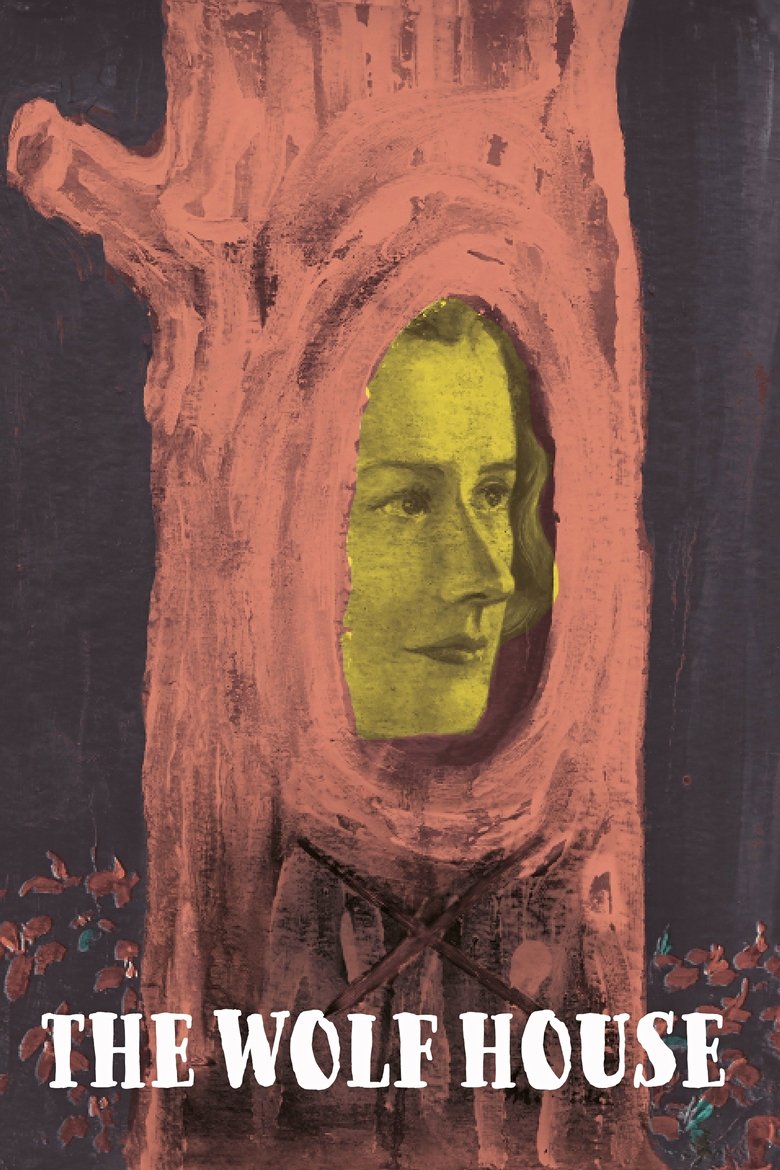
There's a moment in The Wolf House where a face simply stops being a face. It melts, reforms, grows, recedes, and then becomes something else entirely before you've even processed what it was. That moment is genuinely extraordinary. It's also, in a nutshell, both the film's greatest strength and its most frustrating limitation.
Let me be clear about what this film is, technically speaking: it's remarkable. Built entirely through stop-motion animation, every single frame looks hand-sculpted, hand-smeared, hand-breathed into life. Walls pulse and ripple. Furniture sprouts limbs. Pig faces bloom from plaster. The whole thing has the quality of watching a fever dream someone has painted directly onto the inside of their skull. As a feat of physical filmmaking, it demands respect. I sat there for stretches of it with my jaw genuinely loose.
But here's the thing. I don't review art installations. I review films. And when I put The Wolf House up against that standard, it wobbles considerably.
The setup is rooted in something genuinely disturbing: the real history of a German colony in Chile with a dark, deeply sinister past. The film takes that foundation and spins it into a fable about a young woman who flees a religious colony only to find herself trapped inside a house that warps and shifts around her, bending reality to keep her contained. It's rich territory. Control, isolation, the way belief systems can be weaponised against vulnerable people: all of that is there, circling in the imagery. But circling is about all it does. The film keeps orbiting the same thematic ground without ever landing, without ever pushing into it hard enough to make you feel something rather than simply observe something.
There's barely any dialogue. Plot progression is minimal by design. The dreamlike logic it operates on seems to actively resist emotional engagement, as though clarity of feeling might somehow compromise the purity of the aesthetic experience. The result is that you spend much of the runtime admiring the craft from a polite distance, like standing in front of a painting you can see is technically exceptional but that leaves you cold. I kept waiting for the horror to get under my skin the way The Witch (2015) did, where dread accumulates slowly but absolutely lands. Here it stays stubbornly conceptual, interesting to think about rather than frightening to experience.
At 75 minutes, it shouldn't feel stretched. And it doesn't feel boring, exactly. It's more that it keeps circling without deepening, and eventually you notice the circle. The symbolism is potent in individual moments but never quite coalesces into a satisfying whole. There's no payoff that feels earned, no emotional release, no sense of arrival. It just stops.
I've seen animation used to carry genuine historical and emotional weight. Josep (2020) is a good example of a film that uses its hand-drawn aesthetic to make you feel the weight of real atrocity without losing the human being at the centre of it. The Wolf House has the atrocity in its DNA but keeps the human being frustratingly abstract.
None of this means the film isn't worth seeing. It is, particularly if you have any interest in animation as a form, or in what's possible when filmmakers commit completely to a singular, uncompromising vision. There's genuine hypnotic pull to it in places, and I wouldn't want to talk anyone out of experiencing it for themselves. It's also coming out of Chilean cinema that has produced some genuinely arresting work, and I think of El Conde (2023) as a more successful example of that tradition using dark historical material and bold stylistic choices to arrive somewhere that actually satisfies.
Two and a half stars feels right. A haunting dollhouse, beautifully constructed, with no one truly home. The craft earned my admiration. The film, taken whole, never quite earned my heart.
Rating: ★★½ | Year: 2018 | Watched: 2026-04-24
Where to watch
Watch in the UK
Stream: Bloodstream
Rent: Bloodstream
Physical: Amazon UK · Zavvi
Watch in the US
Stream: fuboTV · Night Flight Plus · OVID · Fandor Amazon Channel
Rent: Amazon Video · Bloodstream
Buy: Amazon Video
Physical: Amazon US
Affiliate disclosure: Movies With Macca may earn a small commission on purchases or subscriptions started via these links. It costs you nothing extra.
Related on Movies With Macca
More from Chile: Pamfir (2022) · The Family (2017) · El Conde (2023)
More from the 2010s: Wonder (2017) · Beautiful Boy (2018) · The Witch (2015) · What We Do in the Shadows (2014)
More animation: Fantastic Planet (1973) · Alice in Wonderland (1951) · Mononoke the Movie: The Phantom in the Rain (2024) · Mononoke the Movie: Chapter II - The Ashes of Rage (2025)
More horror: Invasion of the Body Snatchers (1956) · Viy (1967) · Nightmare City (1980) · Angst (1983)