The Seventh Victim (1943)
★★½ — The Seventh Victim (1943)

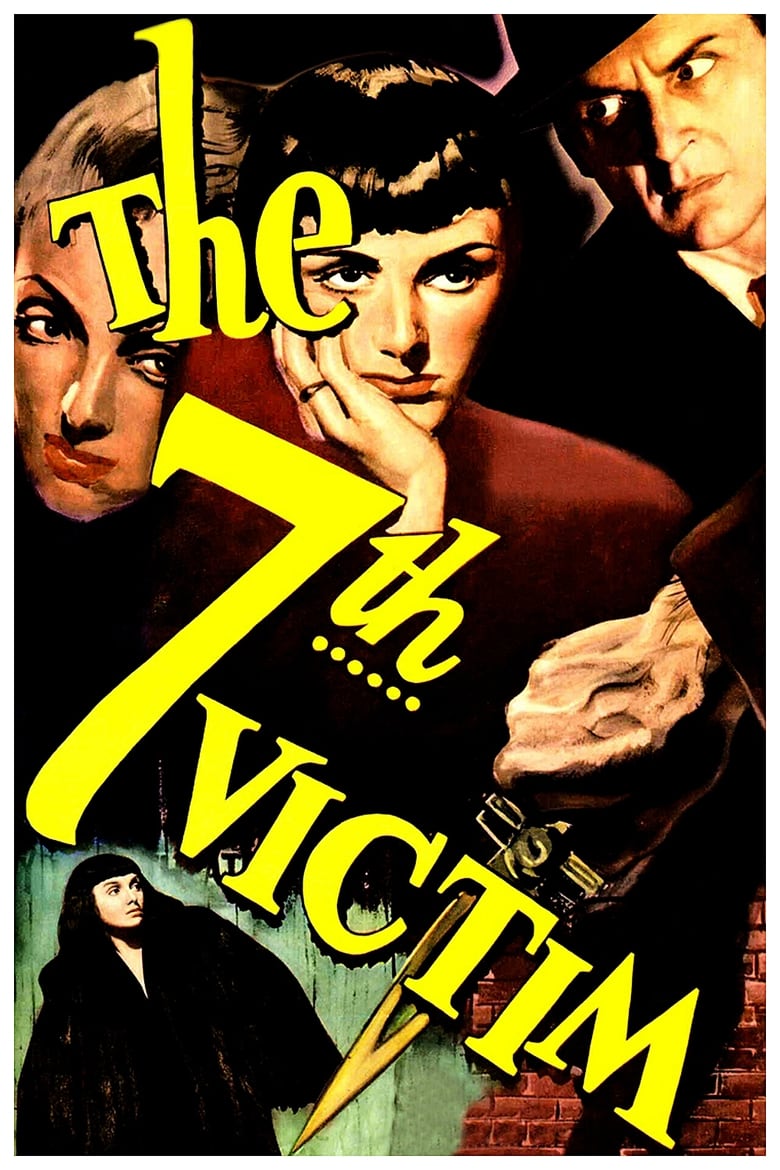
There's a moment in The Seventh Victim where the dread isn't coming from anything lurking in the shadows or any sudden shock. It's coming from a quiet, ordinary room, and a woman sitting in it who has simply decided she doesn't want to live anymore. That's the kind of horror this film is dealing in, and it's genuinely unsettling in a way that most of its contemporaries wouldn't dare attempt.
This is a Val Lewton production, and if you've seen my reviews of Cat People or I Walked with a Zombie, you'll know what that label signals: atmosphere over spectacle, psychological unease over monster-movie mechanics, and a genuine willingness to sit with darkness rather than dispel it at the last minute. The Seventh Victim might be the bleakest of the lot. Set in Greenwich Village, it follows a young woman searching for her missing sister, who has fallen in with a secret Satanist cult. But that description makes it sound far more lurid than it actually is. The cult here isn't flamboyant or theatrical. They're quiet, polite, almost mundane, which is precisely what makes them so chilling.
The cinematography is gorgeous in the way only 1940s noir-adjacent black and white can be. Shadow-drenched corridors, empty apartments, echoing stairwells. Every frame feels like something has just left the room or is about to enter it. Lewton and his collaborators understood that what you don't show is almost always more frightening than what you do, and that instinct serves the film well throughout.
Where it loses me is in its storytelling. The plot unfolds like a jigsaw puzzle with half the pieces missing. Characters appear, hint at significance, and then disappear before you've had any real time with them. Alliances shift without adequate explanation. Clues surface without context. I found myself working hard to piece together who was connected to whom and why, and that kind of effort shouldn't fall on the audience when the film is only around seventy minutes long. When you can't get your bearings on the people involved, the tension bleeds away. You end up watching strangers navigate a mystery rather than feeling any genuine investment in their fates.
The pacing is the other issue. Deliberate is fine. I'll happily sit with a slow burn if it's building toward something. But there's a difference between purposeful restraint and meandering, and The Seventh Victim spends too much of its running time in the latter camp. Scenes that should feel ominous occasionally just feel slack.
And yet. The final act does something genuinely audacious. Without going into specifics, it refuses the kind of moral or emotional resolution that audiences in 1943 would have expected, and almost certainly wanted. The worldview on offer here is cynical, even nihilistic, in a way that feels startlingly out of step with mainstream Hollywood of the era. Whether that's brave filmmaking or a script that couldn't quite work out how to finish itself, I'm honestly not sure. Maybe both.
There's real intelligence at work in The Seventh Victim, and real courage in its thematic ambitions. It's probing at questions of faith, despair and spiritual emptiness that most films of its time wouldn't touch with a bargepole. I respect that enormously. But respecting a film and being satisfied by it are two different things, and this one left me more frustrated than haunted. The atmosphere is there. The ideas are there. The execution, particularly the script's failure to make you care about its characters, lets the side down.
A fascinating misfire, then. Worth watching if you're a Lewton devotee or if you're curious about how dark American studio horror could get in the early forties. Just go in prepared for a film that reaches further than it manages to grasp.
Two and a half stars.
Rating: ★★½ | Year: 1943 | Watched: 2026-04-16
Where to watch
Watch in the US
Rent: Amazon Video · Apple TV Store · Fandango At Home
Buy: Amazon Video · Apple TV Store · Fandango At Home
Physical: Amazon US
Affiliate disclosure: Movies With Macca may earn a small commission on purchases or subscriptions started via these links. It costs you nothing extra.
Related on Movies With Macca
More with Tom Conway: I Walked with a Zombie (1943) · Cat People (1942)
More from the 1940s: Louisiana Story (1948) · The Ox-Bow Incident (1943) · Men Without Wings (1946) · The Bank Dick (1940)
More horror: Invasion of the Body Snatchers (1956) · Viy (1967) · Nightmare City (1980) · Angst (1983)
More mystery: Mononoke the Movie: The Phantom in the Rain (2024) · Mononoke the Movie: Chapter II - The Ashes of Rage (2025) · Carnival of Souls (1962) · One Way or Another (1975)