The Exiles (1961)
★ — The Exiles (1961)

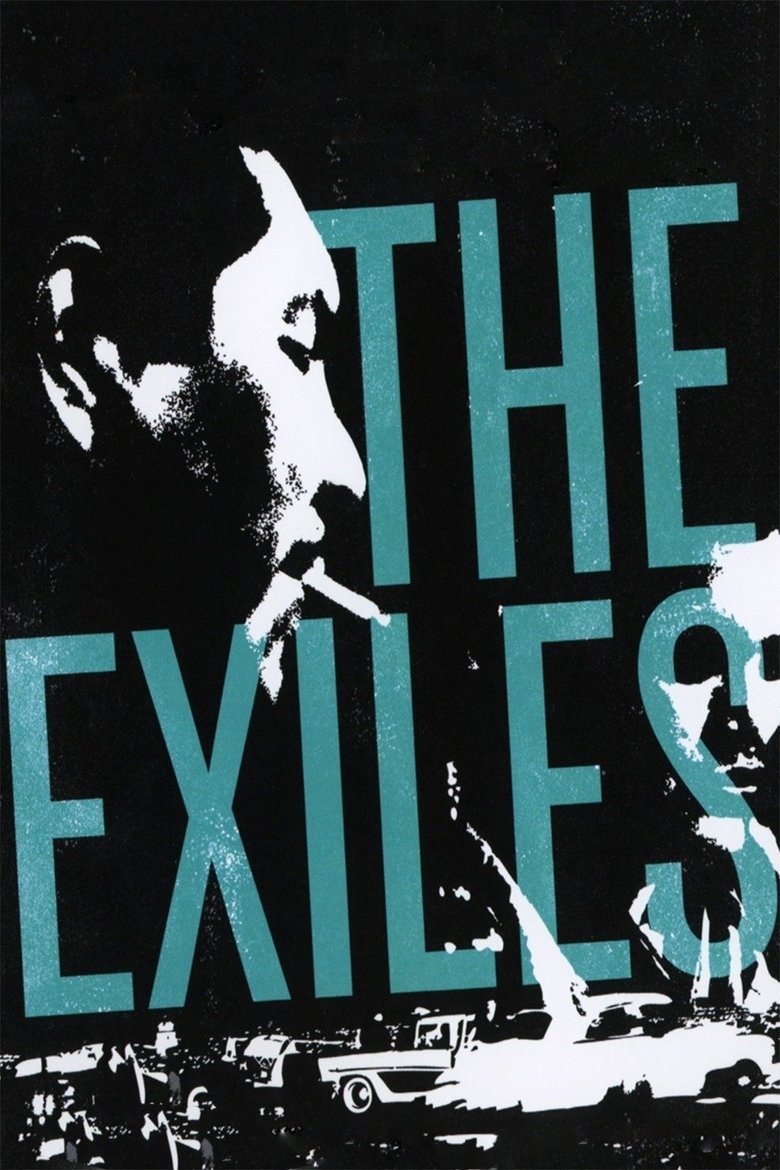
Let me be straight with you: I found The Exiles genuinely difficult to sit through, and not in the productive way that challenging cinema can be difficult. This is a film that gets talked up as an overlooked gem, a raw and vital document of Indigenous urban life in 1950s Los Angeles, and I wanted to love it for exactly those reasons. The subject matter deserves serious, humane attention. What it gets here is something closer to a long, shapeless shrug.
Kent Mackenzie shoots the film in black-and-white, blending documentary observation with fictionalized scenes as a group of young Native American people, displaced from their reservations, drift through one night in the city. Bars, cramped apartments, streets lit by neon. The gritty authenticity is real enough. I'll give it that. But authenticity alone doesn't make a film, and this is where my patience began to wear thin almost immediately.
Scene after scene, characters drink, argue without much heat, or simply stare. There's a loose, cyclical structure that I think is meant to mirror the rhythm of displacement and aimlessness, but it just plays as dramatically inert. Nothing accumulates. You keep waiting for a moment that cracks something open, that pulls you past the window and into these people's lives, and it never comes. The voiceover narration, which should be the bridge between the audience and the subjects, feels oddly detached, like it's describing the characters from a respectful but unbridgeable distance. That distance is the film's fatal flaw. Rather than presenting full, complicated human beings, it reduces its subjects to illustrations of marginalization. Symbols, not people.
The soundtrack, jazz and rock 'n' roll, is apparently meant to evoke youthful restlessness and rebellion, but it feels bolted on rather than felt. Compare that to something like Carnival of Souls (1962), another low-budget American film from roughly the same era, where the sound design is doing genuine, unsettling emotional work from the first frame. Here it's background noise, atmosphere without purpose.
I understand the argument for The Exiles as a sociological or archival document. These faces, these streets, this specific, neglected community, were almost never seen on screen in 1961, and that fact carries real weight. I'm not dismissing the importance of what Mackenzie set out to do. But importance of subject is not the same as quality of execution, and conflating the two does no one any favours, least of all the people the film is trying to honour. If the measure of a film is whether it makes you feel something, whether it builds, whether it takes you somewhere you couldn't have gone alone, then this one fails on all counts.
There's no narrative drive to speak of. No emotional catharsis. No central story, just a loop of boredom and despair that repeats without deepening or evolving. I kept thinking of the ways other filmmakers working in observational or semi-documentary modes manage to generate genuine intimacy and urgency, and by comparison The Exiles feels like a rough cut that was never properly shaped into something an audience could actually hold onto.
One star. The intentions are earnest, and the subject is important. But good intentions and important subjects don't automatically produce good films, and this one confuses realism with resonance. Watching lives unfold through glass is not the same as being let in. After ninety-odd minutes, I was still firmly outside, and no amount of historical significance changes that.
Rating: ★ | Year: 1961 | Watched: 2026-04-20
Where to watch
Watch in the UK
Rent: BFI Player
Physical: Amazon UK · Zavvi
Watch in the US
Stream: Kino Film Collection
Rent: Amazon Video · Apple TV Store · Google Play Movies · YouTube
Buy: Amazon Video · Apple TV Store · Google Play Movies · YouTube
Physical: Amazon US
Affiliate disclosure: Movies With Macca may earn a small commission on purchases or subscriptions started via these links. It costs you nothing extra.
Related on Movies With Macca
More from the 1960s: Viy (1967) · Persona (1966) · Carnival of Souls (1962) · Daisies (1966)
More drama: Viy (1967) · Wonder (2017) · A Better Tomorrow (1986) · Beautiful Boy (2018)