
Safety Last! (1923)
★★★ — Safety Last! (1923)

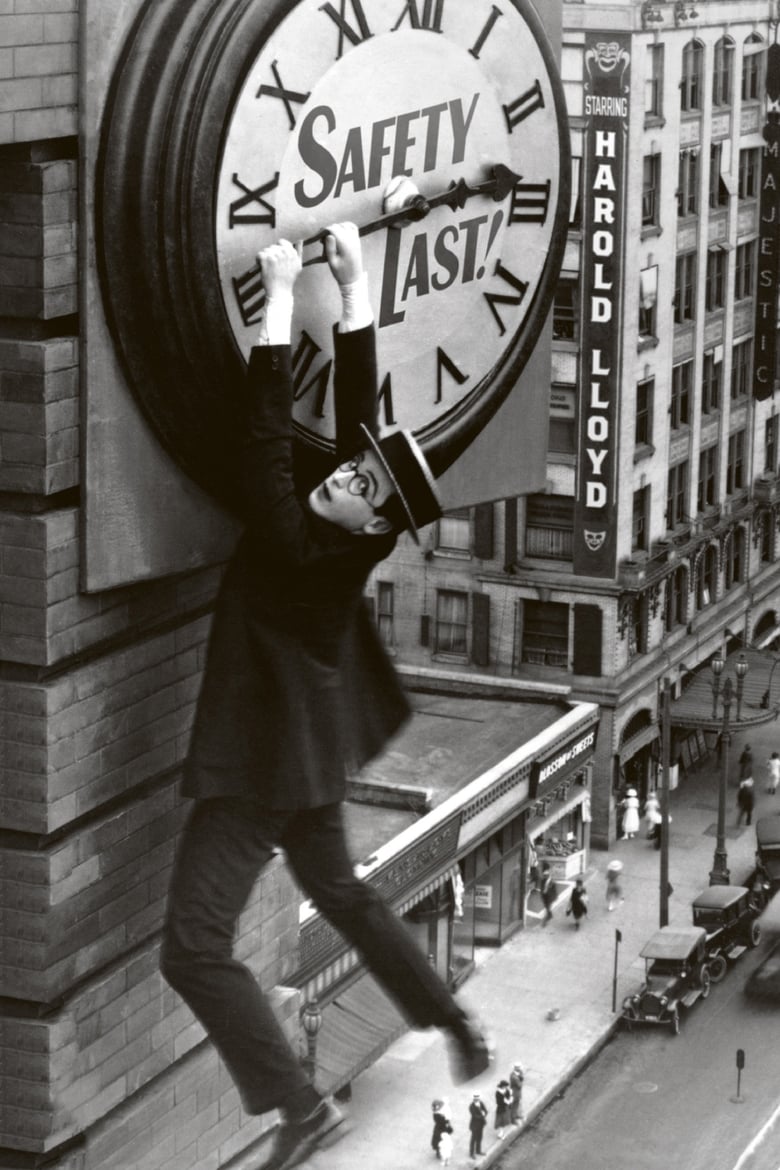
That clock scene still makes my palms sweat. A hundred years on, Harold Lloyd dangling from the hands of a giant timepiece high above a city street remains one of the most viscerally effective images in all of comedy, and the fact that it works just as well today as it ever did tells you everything you need to know about why Safety Last! matters. This is a film that earns its reputation.
The setup is deceptively simple: a small-town boy heads to the big city, lands a job in a department store, and tries desperately to convince his sweetheart back home that he's already made it when he very much hasn't. It's the kind of premise you could transplant into a modern rom-com without changing much, and that's a genuine compliment. The social climbing, the gap between performance and reality, the chaos of urban life pressing in from every direction, it all feels surprisingly fresh. Lloyd understood something that a lot of filmmakers still get wrong: if the story is relatable, the audience will follow you anywhere, including up the side of a building.
Lloyd's "Glasses Character" is the key to the whole thing. Where some silent comedians built their personas around exaggeration, mugging desperately at the camera to signal the joke, Lloyd plays it straight. He's an ordinary bloke in an increasingly extraordinary situation, and his reactions are measured, grounded, and all the funnier for it. His physical comedy is precise and genuinely athletic, and you never lose the sense that he actually means it. There's real commitment in every stumble and grab and near-miss.
The building climb that closes the film is rightly celebrated, but what I appreciated on this watch was how well the film builds to it. The department store sequences, the escalating gags, the accumulation of small disasters, it's all doing structural work, layering absurdity and suspense so that by the time Lloyd starts climbing, you're already thoroughly invested. It reminded me of how well The General (1926) uses cumulative comic momentum, the way the best silent comedies don't just string gags together but build something with them.
That said, I'll be honest about the rough edges, because they're there. The pacing drags in a few spots in the middle stretch, some of the gags do their job and then get repeated a beat too long, and the romantic subplot is paper-thin even by the standards of the era. The girl exists largely to be impressed, and while that's fairly standard for the time, it doesn't exactly add depth. These aren't fatal flaws, but they're worth noting if you're coming in expecting perfection.
What you get instead of perfection is something arguably better: a film that's still genuinely funny, genuinely thrilling, and genuinely smart about how it tells its story. The urban setting crackles with energy. The department store chaos has a kind of anarchic life to it. And the final sequence, for all that it's been written about and referenced and parodied endlessly, still delivers. Your body doesn't know it's watching archive footage. Your hands grip the armrests anyway.
Three stars out of five. Safety Last! isn't quite a flawless classic in my book, but it's exceptional for what it is, and what it is is a funny, thrilling, beautifully constructed piece of physical storytelling that has absolutely no business being this entertaining at its age. If you've been putting off getting into silent comedy, this is as good a place to start as any.
Rating: ★★★ | Year: 1923 | Watched: 2026-04-24
Where to watch
Watch in the UK
Rent: Amazon Video
Buy: Apple TV Store · Amazon Video
Physical: Amazon UK · Zavvi
Watch in the US
Stream: HBO Max Amazon Channel · Philo · Fandor Amazon Channel · HBO Max
Rent: Amazon Video · Apple TV Store · Fandango At Home
Buy: Amazon Video · Apple TV Store · Fandango At Home
Physical: Amazon US
Affiliate disclosure: Movies With Macca may earn a small commission on purchases or subscriptions started via these links. It costs you nothing extra.
Related on Movies With Macca
More from the 1920s: The Eagle (1925) · The General (1926) · The Docks of New York (1928) · A Throw of Dice (1929)
More comedy: The Eagle (1925) · The General (1926) · Americana (2023) · The Naked Gun: From the Files of Police Squad! (1988)
More romance: The Eagle (1925) · The Last Picture Show (1971) · The General (1926) · The Docks of New York (1928)



