Glen or Glenda (1953)
★★ — Glen or Glenda (1953)

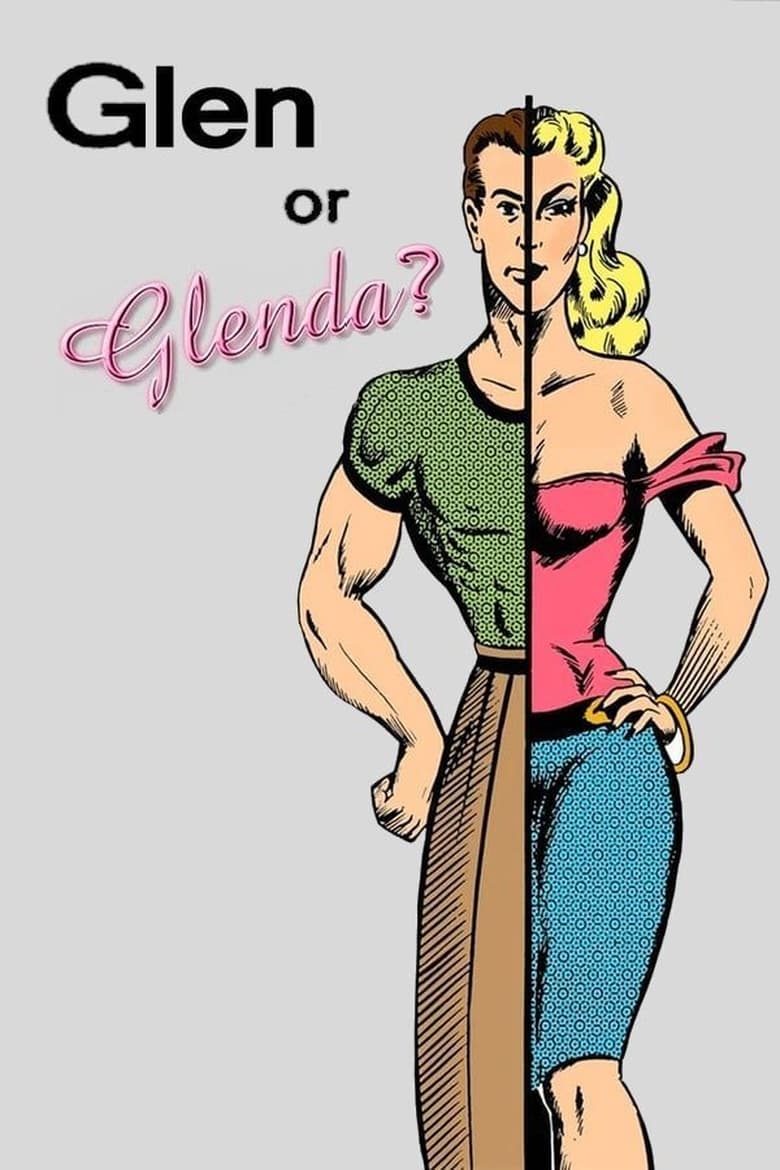
There's a moment in Glen or Glenda where Bela Lugosi, playing some kind of god-like scientist figure, stares directly into the camera and rasps about angora sweaters. No context. No explanation. Just Lugosi, those hollow eyes, and the wool of a soft jumper hanging in the air like a philosophical proposition. If that sentence doesn't tell you exactly what kind of film you're in for, nothing will.
And yet, here's the thing: I can't quite bring myself to dismiss it entirely. Ed Wood, directing and starring, was making a film in 1953 about cross-dressing and gender identity with something approaching genuine empathy. Think about what that means. This was an era when gender nonconformity wasn't just socially stigmatised, it was criminalised. Mainstream culture treated trans and gender-nonconforming people as deviants to be pitied, punished, or pathologised. Wood stepped in front of a camera dressed in women's clothing and essentially said: these are human beings, and they deserve understanding. That took a particular kind of courage, even if the film itself is, to be blunt, an absolute shambles.
Because good intentions don't make a good film, and Glen or Glenda is a genuinely difficult watch, not for its subject matter, but for its execution. The structure lurches from documentary-style narration to stagey dramatisation to surreal dream sequences stuffed with stock footage of stampeding bison and lightning storms. There's no coherent rhythm to any of it. It feels less like a film and more like someone has taped together a psychology pamphlet, a B-movie melodrama, and a fever dream, and then submitted the whole thing before anyone had a chance to review it. The dialogue is stilted in ways that go beyond low-budget charm, and the pacing is so erratic that you lose the thread almost immediately.
Lugosi's presence is the strangest element of all. He's billed prominently, appears in several scenes, mutters cryptic lines about the nature of humanity and the pull of the universe, and has absolutely nothing to do with the rest of the story. It's baffling even by cult-movie standards. I've seen Lugosi wasted before, and I reviewed The Black Cat where he was at least given something to work with, but here he's practically decorative. A famous face bolted onto a film that didn't quite know what it was doing, which, in fairness, describes most of Glen or Glenda.
What's most uncomfortable by today's standards is how freely the film conflates cross-dressing, transgender identity, and fetishism. It treats them as variations of the same thing, filtered through 1950s psychoanalytic theory that has long since been discarded. The film wants desperately to argue for acceptance, and you can feel Wood's personal investment in every frame, but the framework it uses to make that argument was already shaky and is now, seventy-odd years later, painful to sit with. The very language through which it tries to extend compassion ends up muddying the waters it's trying to clear.
And yet I keep coming back to that central fact: this film exists, from 1953, made by a man who was himself gender-nonconforming, arguing publicly for dignity and understanding. There's something genuinely moving about that, separate from any assessment of the film's quality. As a piece of queer cinema history, it's irreplaceable. As a coherent, effective piece of filmmaking, it falls well short.
Watch it as a curiosity. Watch it as a document of a particular moment in social history, when the mainstream wouldn't touch this subject and one deeply idiosyncratic filmmaker decided to anyway. Just don't go in expecting it to hold together, because it doesn't. It's earnest and bizarre and unintentionally alienating all at once, a hot mess with its heart more or less in the right place.
Two stars.
Rating: ★★ | Year: 1953 | Watched: 2026-04-15
Where to watch
Watch in the UK
Stream: Amazon Prime Video · Cultpix · Amazon Prime Video with Ads · Brew
Rent: Amazon Video
Buy: Apple TV Store · Amazon Video · Google Play Movies · YouTube
Physical: Amazon UK · Zavvi
Watch in the US
Stream: Amazon Prime Video · Brew · Cultpix · Amazon Prime Video with Ads
Rent: Amazon Video · Apple TV Store · Google Play Movies · YouTube
Buy: Amazon Video · Apple TV Store · Google Play Movies · YouTube
Physical: Amazon US
Affiliate disclosure: Movies With Macca may earn a small commission on purchases or subscriptions started via these links. It costs you nothing extra.
Related on Movies With Macca
More with Bela Lugosi: The Black Cat (1934)
More from the 1950s: Invasion of the Body Snatchers (1956) · Alice in Wonderland (1951) · Letter from Siberia (1957) · Invaders from Mars (1953)
More drama: Viy (1967) · Wonder (2017) · A Better Tomorrow (1986) · Beautiful Boy (2018)
More comedy: The Eagle (1925) · The General (1926) · Americana (2023) · The Naked Gun: From the Files of Police Squad! (1988)