Days of Heaven (1978)
★★★½ — Days of Heaven (1978)

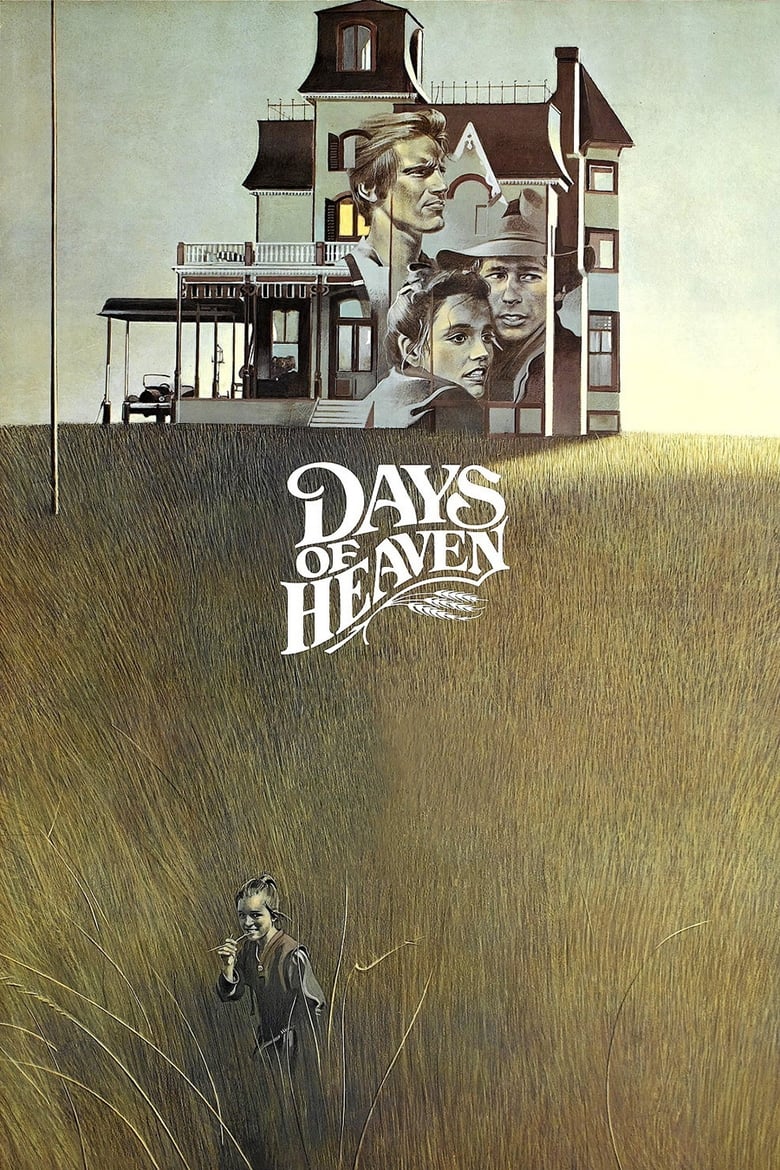
There are films you watch, and there are films you feel on your skin. Days of Heaven is firmly the second kind. Terrence Malick builds less of a story here than a sustained mood, a long amber exhale over wheat fields and open skies, and whether that thrills you or frustrates you will probably decide exactly how much you get out of it. For me, it does both at once, which is why I've settled on three and a half stars rather than five or two.
Let's start with what nobody can argue about: this film is staggering to look at. Cinematographer Néstor Almendros shot almost the entire thing in natural golden-hour light, that narrow window just after sunrise and before sunset when the world looks like it's been dipped in honey. What makes it even more extraordinary is that Almendros was losing his sight during production. I find that fact almost unbearable to sit with. The result is a film that moves through frame after frame of images so carefully composed they feel closer to moving oil paintings than anything you'd call footage. Soft focus. Drifting smoke. Prairie skies that feel like they could swallow you whole. The visuals alone justify your time.
The setting is a Texas farm in the final years of the First World War, and there's a hardscrabble earthiness to the place that stops the whole thing floating off into pure abstraction. Richard Gere, Brooke Adams, and Sam Shepard play out a love triangle that simmers with jealousy and quiet desperation, never tipping into melodrama. The performances are restrained and raw, exactly the right register for a film this airy. But the real revelation is Linda Manz, whose voiceover narration haunts the whole film like a ghost that got lost on its way somewhere else. Her voice is strange and particular and unforgettable, and it gives the film a perspective it would be badly missing without her.
Ennio Morricone's score deserves its own paragraph. It's ethereal and melancholic and deeply atmospheric, and there are moments where it's carrying more emotional weight than anything in the script. That's both a tribute to how good the score is and a gentle indictment of how thin the story can feel. The narrative itself is almost fable-like in its simplicity, and Malick trusts mood over momentum to a degree that borders on passive. Long stretches drift without much forward pull. If you're looking for propulsive drama, you'll be checking your watch.
I don't say that as a dismissal. It's more an honest description of what the film is and isn't. Malick isn't trying to grip you by the collar. He wants you to surrender to something, to let the images and the music and Manz's narration wash over you without demanding that they add up in a conventional way. On that terms, the film succeeds completely. It's the kind of experience that sits with you afterwards not as a sequence of events you can replay in your head, but as a feeling, a texture, like remembering a dream you had in warm light.
It reminded me, in an oblique way, of my experience watching A River Called Titas, another film that prioritises atmosphere and elemental human feeling over tidy plotting, and earns its pace through sheer visual authority. They're very different films, but they share that quality of asking you to meet them on their own terms or not at all.
Three and a half stars.
Days of Heaven isn't a gripping drama. It's a transcendent sensory experience, and those are rarer than gripping dramas. Its storytelling is understated to a fault, and I won't pretend otherwise. But its beauty lingers long after the credits roll. Watch it less with your critical brain switched on and more like you're half-dreaming in sunlight. That's when it really opens up.
Rating: ★★★½ | Year: 1978 | Watched: 2026-04-19
Where to watch
Watch in the UK
Rent: JustWatch TV · Apple TV Store · Amazon Video · Google Play Movies
Buy: Apple TV Store · Amazon Video · Google Play Movies · Sky Store
Physical: Amazon UK · Zavvi
Watch in the US
Stream: MGM Plus
Rent: JustWatch TV · Amazon Video · Apple TV Store · Google Play Movies
Buy: Amazon Video · Apple TV Store · Google Play Movies · YouTube
Physical: Amazon US
Affiliate disclosure: Movies With Macca may earn a small commission on purchases or subscriptions started via these links. It costs you nothing extra.
Related on Movies With Macca
More with Richard Gere: Chicago (2002)
More from the 1970s: Fantastic Planet (1973) · Here and Elsewhere (1976) · Italianamerican (1974) · Punishment Park (1971)
More drama: Viy (1967) · Wonder (2017) · A Better Tomorrow (1986) · Beautiful Boy (2018)
More romance: The Eagle (1925) · The Last Picture Show (1971) · The General (1926) · The Docks of New York (1928)