
David Holzman's Diary (1967)
★★½ — David Holzman's Diary (1967)

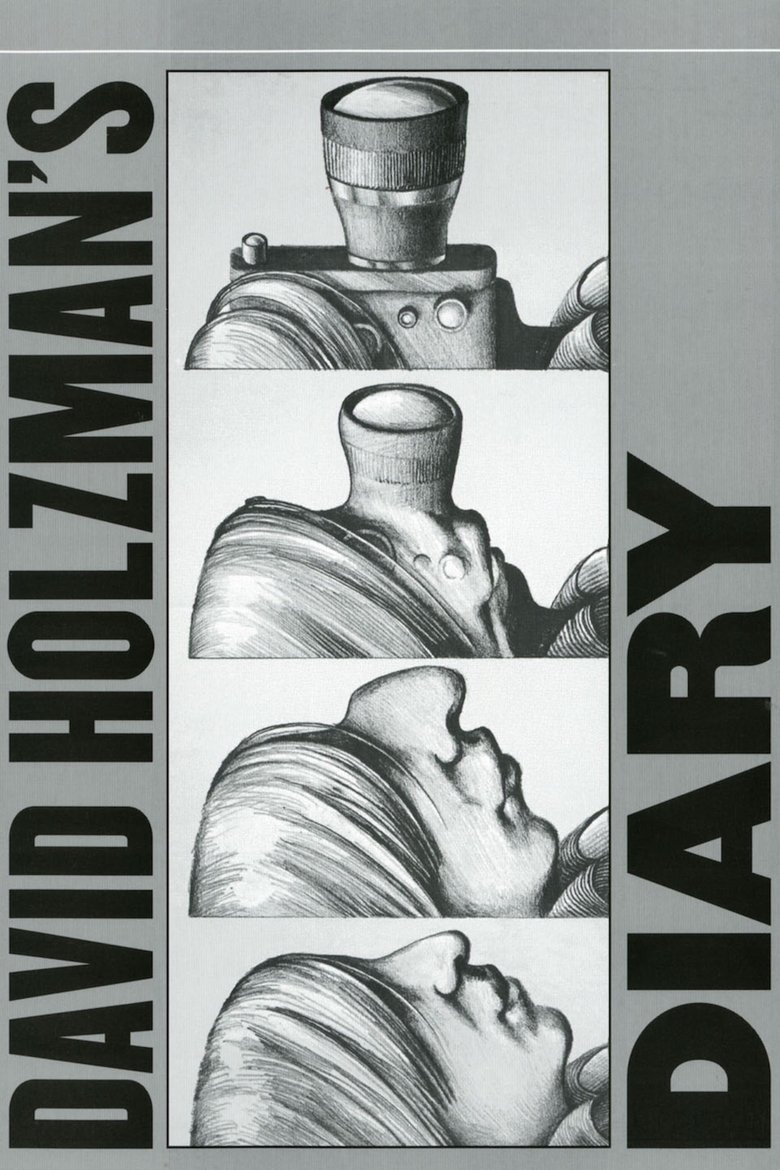
There's a moment watching David Holzman's Diary where you catch yourself waiting for the notification sound. The guy is talking directly into the lens, rambling about his day, his anxieties, his girlfriend, his sense of self, and your brain keeps pattern-matching it to something you've scrolled past a thousand times on YouTube. It's a 1967 film, shot on grainy black-and-white 16mm, and yet it looks and feels like the ancestor of every confessional vlog, every Instagram story, every face-to-camera overshare you've ever half-watched while eating your tea. That's genuinely extraordinary. It's also, I have to be honest, not quite enough to make it a satisfying watch.
The setup is deceptively simple. A young New York filmmaker called David Holzman decides to document his life with a handheld camera. He films himself talking. He films his girlfriend without always asking. He wanders the streets pointing the lens at strangers. He installs a hidden camera in his flat. The whole thing presents itself as raw, unmediated reality, a diary in moving pictures, and as a formal conceit it's remarkably sophisticated. The film is asking serious questions about what happens when you mediate your own existence through a camera. Does the act of filming change the thing being filmed? Is any of this authentic, or is David performing a version of himself the moment he presses record? These are interesting questions. They're also questions that David Holzman's Diary raises and then proceeds to sit on, without quite doing enough with them.
Because here's the problem: David, as a subject, is exhausting in ways the film doesn't seem fully aware of. His monologues spiral inward and stay there. His fixation on his girlfriend tips from sympathetic insecurity into something genuinely uncomfortable, particularly the way he films her without consent and treats her privacy as raw material for his art. The film doesn't entirely let him off the hook for this, but it doesn't push hard enough either. And without a narrative arc or any real emotional development to grab onto, you end up feeling less like a witness to something meaningful and more like you've been cornered at a party by someone who wants to talk about themselves for ninety minutes and keeps mistaking your polite nodding for fascination.
I kept thinking about Daisies (1966), made just a year earlier, which is similarly experimental and similarly interested in performance and identity, but crackles with energy and wit in a way this film simply doesn't. David Holzman's Diary is more inert. The ideas are there. The execution is slow, repetitive, and often alienating.
And yet. I can't dismiss it entirely, because its historical prescience is genuinely startling. Everything we now take for granted, the selfie, the vlog, the performative authenticity of social media, the compulsive need to document and broadcast private life, it's all here, decades before the technology that would make it universal. The film understood something about modern identity before modern identity had fully arrived. That's not nothing. That's actually quite remarkable.
But understanding something and dramatising it compellingly are two different things. As a piece of film criticism in fictional form, as a comment on the illusion of authenticity in personal media, David Holzman's Diary holds up. As an actual viewing experience, it's a tough sit. The pacing is uneven, the content repetitive, and the central character more irritating than illuminating. You watch it and think: yes, this predicted everything. And then you think: I could have done with about thirty fewer minutes of it.
Two and a half stars. See it once, and see it for what it represents. It's a fascinating artefact and a legitimate piece of film history. Just don't go in expecting the ideas to be as engaging as the concept promises, because the gap between those two things is where this film quietly loses you.
Rating: ★★½ | Year: 1967 | Watched: 2026-04-27
Where to watch
Watch in the US
Rent: Amazon Video
Buy: Amazon Video
Physical: Amazon US
Affiliate disclosure: Movies With Macca may earn a small commission on purchases or subscriptions started via these links. It costs you nothing extra.
Related on Movies With Macca
More from the 1960s: Viy (1967) · Persona (1966) · Carnival of Souls (1962) · Daisies (1966)
More comedy: The Eagle (1925) · The General (1926) · Americana (2023) · The Naked Gun: From the Files of Police Squad! (1988)
More drama: Viy (1967) · Wonder (2017) · A Better Tomorrow (1986) · Beautiful Boy (2018)



