Dante's Inferno (1911)
★★½ — Dante's Inferno (1911)

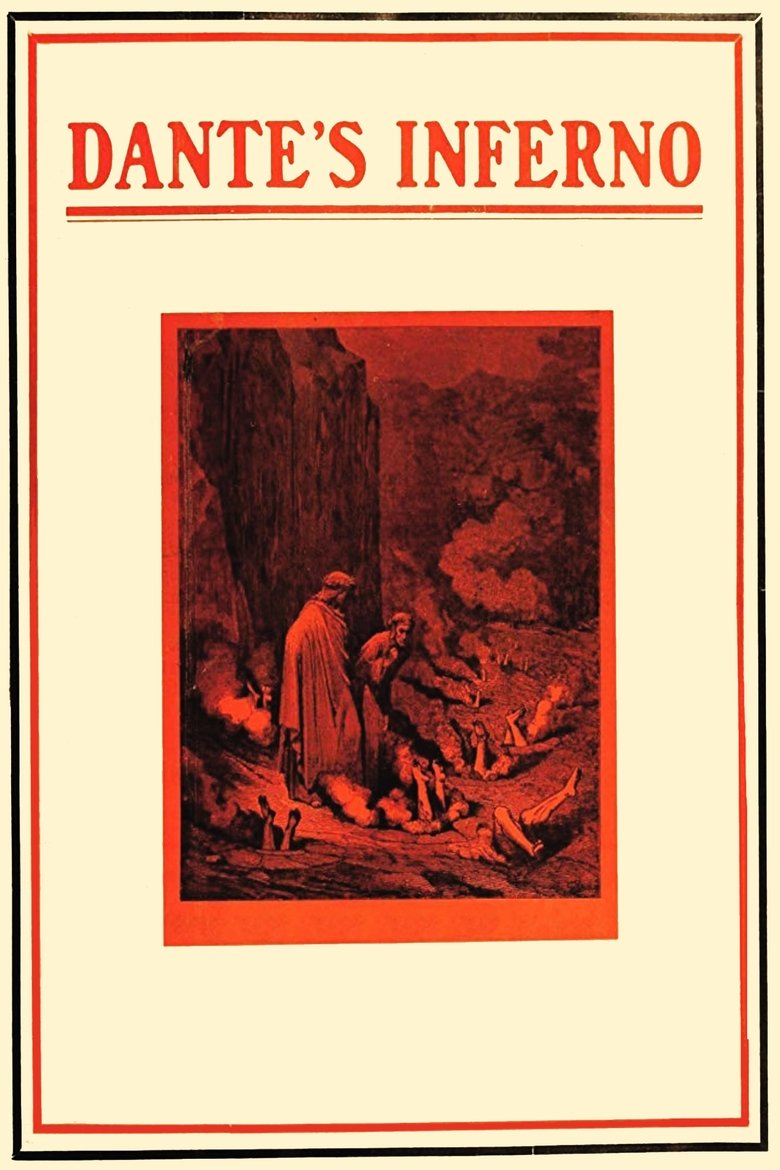
Let me be honest with you: I did not sit down with Dante's Inferno (1911) expecting to be entertained. And that is probably the only way to watch it without feeling utterly bewildered. This is a film that demands to be approached as an artefact first and a movie second, because by any modern measure of storytelling, pacing or emotional engagement, it barely functions. But what it does do, given its age, is genuinely staggering.
We are talking about a film made roughly two decades into cinema's entire existence. The moving image was still a novelty. And yet here are filmmakers taking on Dante Alighieri's fourteenth-century vision of Hell, one of the most ambitious and complex works in all of Western literature, and dragging it kicking and screaming onto a screen. The sheer audacity of that is hard to fully wrap your head around. Writhing sinners, monstrous demons, cavernous pits of fire, all conjured through hand-painted sets and primitive effects that, by the standards of 1911, must have looked absolutely otherworldly to anyone sitting in that theatre. I can only imagine the collective jaw-drop.
Watching it in the present day, though, is a genuinely strange experience. The film has no intertitles to guide you through the story. There is, of course, no sound. What you get instead is a succession of static tableaux: actors in grotesque makeup, arms outstretched, frozen in theatrical poses against painted backdrops. It is less like watching a narrative unfold and more like leafing through a very old illustrated book. Fascinating in the way that old things can be fascinating, but emotionally distant in a way that is almost impossible to overcome.
The acting style is exactly what you would expect from the era, broad and highly stylised, every gesture enormous and deliberate. That was simply the theatrical convention of the time, and it is unfair to hold it against the film. What is harder to forgive, even with historical sympathy on your side, is the near-total absence of continuity. Without some prior knowledge of the source material, you are largely left guessing at who anyone is and why they are suffering. There is no narrative thread to follow, just scene after scene of hellish imagery with no connective tissue binding it together.
And yet. The imagery itself has a raw, strange power. You can see in it the distant DNA of horror, fantasy, even animation. It made me think of Viy (1967), another film that reaches into folk mythology and pulls out genuinely unsettling visual ideas on a shoestring. The impulse to put the supernatural on screen, to make the unimaginable visible, is the same, even if the execution is separated by over half a century.
The fact that this film exists at all is remarkable. So many silent-era works simply did not survive. Nitrate film decayed. Prints were destroyed. Entire bodies of work vanished. That a nearly 115-year-old film depicting the circles of Hell has made it to us is, in its own small way, miraculous.
So where does that leave me? Dante's Inferno is not good, not by any standard of what we expect a film to do. It does not tell its story clearly, it does not draw you in emotionally, and it offers nothing in the way of narrative satisfaction. But it is important, and it is genuinely awe-inspiring in its ambition. Watch it not because you expect a good night in, but because you want to see what cinema looked like when it was still figuring out what cinema even was. That is worth something, even if two and a half stars is about as far as my generosity stretches.
Two and a half stars.
Rating: ★★½ | Year: 1911 | Watched: 2026-04-17
Where to watch
Watch in the US
Physical: Amazon US
Affiliate disclosure: Movies With Macca may earn a small commission on purchases or subscriptions started via these links. It costs you nothing extra.
Related on Movies With Macca
More from Italy: Nightmare City (1980) · Cemetery Man (1994) · One Way or Another (1975) · Chicken for Linda! (2023)
More fantasy: Viy (1967) · Alice in Wonderland (1951) · Mononoke the Movie: The Phantom in the Rain (2024) · Mononoke the Movie: Chapter II - The Ashes of Rage (2025)
More horror: Invasion of the Body Snatchers (1956) · Viy (1967) · Nightmare City (1980) · Angst (1983)