Come Drink with Me (1966)
★★½ — Come Drink with Me (1966)

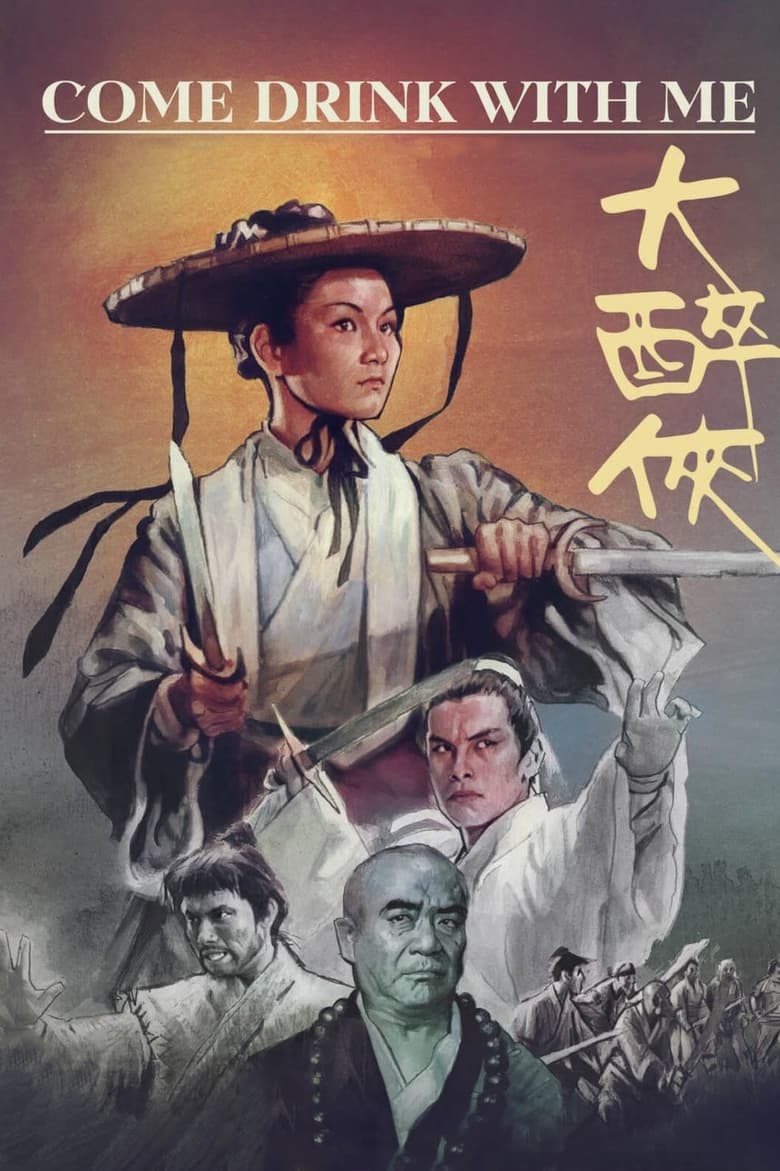
There's a particular kind of respect you give a film that clearly mattered, that clearly changed things, while also quietly admitting it didn't exactly set your world on fire. That's where I land with Come Drink with Me. King Hu's 1966 wuxia landmark is one of those films I'm glad exists, glad I've seen, and fairly unlikely to revisit in a hurry.
It follows Golden Swallow, a female warrior tasked with escorting captured rebels through territory crawling with bandits, monks, and the odd drunken swordsman. The setup is lean, almost skeletal, and that's both a strength and a problem. On one hand, the film wastes no time on unnecessary complexity. On the other, it gives you precious little to hold onto between fight sequences.
And the fight sequences are genuinely lovely. That's not a back-handed compliment. The choreography here is fluid and balletic, built on grace rather than brute impact. The wire work is subtle enough that it lends the combat a kind of weightless, dreamlike quality rather than tipping into obvious artificiality. You can see exactly why this film shaped everything that came after it. The language of wuxia, the grammar of it, is being written in real time on screen. That's no small thing.
But here's the honest truth: watched purely as a film in 2025, without the historical footnote attached, it's fairly average. The pacing is deliberate to the point of languid. There are stretches where the film seems content to simply exist in its atmosphere rather than do anything with it. Misty forests, candlelit inns, monastic courtyards, all of it beautifully composed, all of it a little inert. It reminded me in some ways of watching Viy (1967), another 1960s genre film I found visually striking but narratively slight. There's something about that era of fantastical or action-driven cinema where the mood does a lot of heavy lifting that the story probably should be doing.
Golden Swallow herself is worth talking about. A capable, dignified female action lead in 1960s cinema is genuinely rare, and the film deserves credit for that. She carries herself with real authority. But she's more of a symbol than a fully drawn person. We understand what she represents far better than we understand who she actually is. The supporting cast, particularly the Drunken Cat figure who brings welcome comic energy, adds charm. But when their arcs wrap up, there's not much emotional weight to the resolution. Things end because films have to end, not because anything has truly been earned or resolved.
The plot is thin and predictable throughout, which wouldn't necessarily be fatal if the film compensated with thematic depth or character work. Later wuxia films managed to take similarly simple frameworks and find something genuinely moving inside them. Come Drink with Me doesn't quite get there. It's happy to be a well-made genre piece, and it succeeds at that, but it doesn't push past its own formula.
What it does offer, consistently, is atmosphere. King Hu knew how to construct a frame and how to use a location. The theatrical quality of the sets and spaces gives the whole thing an almost operatic feeling, which suits the chivalric codes the story trades in. There's a world here, even if the people populating it feel a little thin.
Two and a half stars. If you're genuinely interested in where martial arts cinema came from, how the wuxia tradition developed and what its building blocks looked like before they were refined and reinvented, then this is essential viewing. It earns that status. But if you're coming to it hoping to be thrilled or moved, you might find it a bit of a polite handshake where you were expecting something warmer. Solid, historically significant, and stubbornly average all at once.
Rating: ★★½ | Year: 1966 | Watched: 2026-04-27
Where to watch
Watch in the UK
Rent: Amazon Video · Google Play Movies · YouTube
Buy: Apple TV Store · Amazon Video · Google Play Movies · YouTube
Physical: Amazon UK · Zavvi
Watch in the US
Stream: ARROW
Rent: Amazon Video · Apple TV Store · Google Play Movies · YouTube
Buy: Amazon Video · Apple TV Store · Google Play Movies · YouTube
Physical: Amazon US
Affiliate disclosure: Movies With Macca may earn a small commission on purchases or subscriptions started via these links. It costs you nothing extra.
Related on Movies With Macca
More from Hong Kong: A Better Tomorrow (1986) · Hand of Death (1976) · Street Fighter (1994) · Rumble in the Bronx (1995)
More from the 1960s: Viy (1967) · Persona (1966) · Carnival of Souls (1962) · Daisies (1966)
More action: A Better Tomorrow (1986) · The General (1926) · Hand of Death (1976) · Daredevil (2003)
More adventure: Alice in Wonderland (1951) · The Eagle (1925) · Louisiana Story (1948) · The General (1926)